What Is Stress at Work and How Leaders Can Manage It
Stress at work is one of the most common challenges faced by professionals in the corporate world today. Deadlines, meetings, targets, stakeholder expectations, competition, constant digital communication, and uncertainty can create continuous pressure. Many professionals appear calm and capable on the outside, yet internally they may feel overwhelmed, tired, distracted, or emotionally stretched.
In a corporate environment, stress is often accepted as normal. People learn to push through it, ignore it, or even wear it as a badge of commitment. However, unmanaged stress slowly affects the way professionals think, speak, listen, decide, connect, and perform.
Stress is not only a personal health concern. It directly influences communication, executive presence, professional relationships, personal brand, and leadership impact. A stressed professional may still deliver work, but the quality of their presence, influence, and decision-making can reduce over time.
Understanding stress is the first step. Managing it with awareness, practice, and support is what helps professionals become more effective, grounded, and inspiring leaders.
What Is Stress in a Corporate Context?
Stress is the body and mind’s response to pressure, uncertainty, conflict, or perceived threat. In the corporate world, this threat is rarely physical. It often comes from tight deadlines, difficult conversations, performance reviews, leadership expectations, job insecurity, unclear priorities, or lack of control.
Not all stress is harmful. Short-term stress can be useful when it helps a professional stay alert, focused, and motivated. This healthy pressure can support performance during presentations, negotiations, launches, or important decisions.
However, stress becomes harmful when it continues for too long. Ongoing stress drains energy, reduces clarity, and affects behavior. It can become a regular operating state rather than an occasional response.
Common corporate stress triggers include back-to-back meetings, conflicting priorities, micromanagement, workplace politics, fear of failure, difficult stakeholders, lack of recognition, work-life imbalance, and constant availability through email, chat, and phone.
The real danger is that many professionals stop noticing their stress. They begin to see irritability, urgency, overthinking, poor sleep, or emotional fatigue as normal. Over time, stress shapes how they show up at work and how others experience them.
How Stress Impacts Communication
Communication is often the first visible area affected by workplace stress. When professionals feel stressed, they tend to react instead of respond. Their tone, words, facial expressions, body language, and listening ability begin to change.
A stressed professional may interrupt more often, sound impatient, become defensive, or avoid difficult conversations. They may over-explain because they feel anxious, or under-communicate because they feel mentally overloaded. They may also miss emotional cues from others.
Stress narrows attention. When the mind feels under threat, it focuses on solving the immediate problem or protecting the self. As a result, empathy, curiosity, and clarity reduce. A leader may believe they are being efficient, while the team experiences them as sharp, distant, or dismissive.
For example, a manager under stress may send short and unclear messages. A senior leader may sound irritated in a meeting. A team member may stop asking questions because they fear judgment. Over time, these patterns create confusion, silence, and emotional distance.
Stress can affect communication through:
- Reduced patience during conversations
- Poor listening and quick assumptions
- Defensive or aggressive responses
- Lack of clarity in messages
- Avoidance of honest feedback
Strong communication requires emotional regulation. When stress controls the nervous system, communication loses its power. Professionals may still speak, present, and write, but their message may not land with the trust, calmness, or influence they intended.
How Stress Affects Presence and Leadership Energy
Professional presence is the way a person shows up in a room, meeting, conversation, or decision-making moment. It includes body language, voice, attention, emotional steadiness, and the energy others feel around them.
Stress affects presence because it pulls attention away from the present moment. A stressed professional may appear distracted, tense, rushed, or mentally absent. Their body language may become closed. Their voice may lose calmness and authority. They may struggle to think clearly under pressure.
Presence is not about looking perfect or always being confident. It is about being grounded, aware, and available. A leader with strong presence helps others feel safe, heard, and focused. A stressed leader, even with good intentions, can unintentionally create anxiety in the team.
This may show up in small ways: checking the phone during conversations, speaking too fast in meetings, reacting strongly to small issues, losing eye contact, showing visible frustration, or rushing people before they have expressed themselves fully.
Leadership presence starts with inner presence. Before a professional can influence others, they must learn to notice their own emotional state. The more grounded they are within themselves, the more stable, clear, and confident they appear to others.
How Stress Damages Professional Connections
Relationships are central to corporate success. Influence, collaboration, promotions, team trust, client relationships, and stakeholder management all depend on the quality of professional connections.
Stress weakens these connections because it reduces emotional availability. A stressed professional may become less empathetic, more transactional, and more focused on tasks than people. They may stop investing in informal conversations, appreciation, encouragement, and relationship-building.
Over time, colleagues may experience them as difficult, unavailable, unpredictable, or self-focused. Even when the person has strong skills, stress can make their behavior feel heavy or unsafe to others.
Stress can also increase conflict. When people are under pressure, they make quicker assumptions and show less patience. Small misunderstandings become bigger issues. Feedback feels personal. Collaboration becomes harder.
In corporate life, results matter. However, relationships carry those results forward. A professional who only focuses on delivery but neglects connection may lose trust, support, and influence. People may still work with them, but they may not feel inspired by them.
When relationships suffer, personal brand also begins to suffer.
How Stress Impacts Personal Brand
Personal brand is the reputation people associate with you. It is what colleagues, leaders, clients, and teams believe about your reliability, attitude, leadership style, communication, and value.
Stress can silently damage personal brand. A capable person may be seen as impatient. A committed leader may be seen as unapproachable. A high performer may be seen as difficult to work with. A strategic thinker may appear scattered. A confident professional may come across as insecure or reactive.
This happens because personal brand is built through repeated experiences. Every meeting, email, presentation, conversation, and decision adds to how people remember you.
Stress creates inconsistency. One day a professional may be calm, clear, and supportive. The next day, they may seem irritated, withdrawn, or abrupt. This inconsistency affects trust. People begin to wonder which version of the person will show up.
Professionals often believe their personal brand is based only on results. Results matter, but behavior matters too. People do not only remember what you deliver. They remember how they feel while working with you.
When stress affects communication, presence, and relationships, it also affects reputation. That reputation can either build influence or quietly reduce it.
How Stress Ultimately Affects Performance
Stress reduces performance in many ways. It does not only create tiredness. It also affects focus, decision-making, creativity, collaboration, emotional control, and resilience.
A stressed mind often finds it harder to prioritize. Everything can feel urgent. This leads to scattered attention, more mistakes, and slower progress. Professionals may spend more time working, but produce less meaningful output.
Stress also reduces creativity. When the brain feels pressured, it moves into survival mode. It looks for quick solutions rather than fresh ideas. This can limit innovation, strategic thinking, and problem-solving.
Team performance can also suffer. A stressed leader may pass their tension to the team. People may become hesitant, defensive, or disengaged. Morale drops when the emotional environment feels unsafe or unpredictable.
Many professionals respond to stress by pushing harder. They work longer hours, skip breaks, ignore recovery, and try to control everything. This may help for a short period, but it weakens long-term effectiveness.
High performance requires energy management, emotional balance, mental clarity, and strong relationships. In the corporate world, unmanaged stress does not stay personal. It becomes visible in communication, leadership, relationships, and results.
How to Deal with Corporate Stress
Dealing with corporate stress does not mean removing every pressure. Pressure is part of professional life. The real goal is to build the capacity to respond better.
The first step is recognizing your stress signals. These signals may be physical, emotional, or behavioral. Tight shoulders, shallow breathing, irritability, overthinking, poor sleep, avoidance, emotional eating, and loss of focus can all point to stress.
Once you notice the signal, pause before responding. A short pause before an email, meeting, or difficult conversation can change the outcome. It gives you space to choose your words instead of reacting from pressure.
Boundaries also matter. Professionals need calendar boundaries, communication windows, focus time, and the ability to say no respectfully. Clarifying priorities with managers and stakeholders reduces unnecessary stress.
It also helps to reframe pressure. Not everything that feels urgent is truly urgent. Ask yourself: What matters most right now? What is within my control? What needs a conversation instead of silent pressure?
Support is equally important. Speaking with a mentor, manager, coach, or trusted peer can create perspective. Stress grows in isolation. It reduces when people feel seen, supported, and guided.
To manage stress better, professionals can notice their signals, pause before reacting, clarify expectations, protect focus time, and seek support instead of handling everything alone.
Regular Practices That Help Manage Stress
Stress management works best as a regular practice, not an emergency response. Small habits done consistently help professionals build inner stability and leadership resilience.
Mindful breathing is one of the simplest practices. A few minutes of slow breathing before a meeting, presentation, or difficult conversation can calm the nervous system and improve clarity.
Reflection and journaling also help. Writing down thoughts allows professionals to understand their triggers, emotions, and repeated patterns. It creates distance from the noise inside the mind.
Physical movement is another powerful practice. Walking, stretching, yoga, gym workouts, or simple mobility exercises help release tension from the body. Since stress often sits in the body, movement helps reset energy.
Digital discipline is essential in corporate life. Constant notifications keep the mind alert and reactive. Turning off non-essential alerts, creating device-free focus blocks, and avoiding late-night work messages can protect mental clarity.
Intentional communication practice also builds confidence. Before an important conversation, ask: What outcome do I want? What emotion am I carrying? How do I want the other person to feel? What must I listen for?
Recovery rituals complete the process. Sleep, breaks, hobbies, family time, quiet time, and reflection support sustained performance. Small daily practices create powerful long-term change.
How Executive Coach Mandeep Helps You Deal with Stress Powerfully
Executive Coach Mandeep helps professionals and leaders understand their stress patterns and transform the way they show up at work. His coaching supports leaders in moving from reaction to response, from pressure to presence, and from self-doubt to grounded confidence.
Through powerful coaching conversations, practical tools, and deep self-awareness work, Mandeep helps leaders identify hidden stress triggers. These triggers often sit beneath behavior: fear of failure, need for approval, perfectionism, conflict avoidance, or the pressure to always appear strong.
Mandeep helps professionals improve communication under pressure. Leaders learn how to pause, listen deeply, speak with clarity, and respond with emotional intelligence. This helps them build trust and influence in challenging situations.
He also supports leaders in strengthening executive presence. As they become more aware of their inner state, they begin to show up with calm authority, confidence, and authenticity. Their teams experience them as more grounded, inspiring, and effective.
Mandeep’s coaching also helps leaders improve relationships, personal brand, and performance. When leaders manage stress powerfully, they become more consistent, approachable, and impactful.
If you want to lead with clarity, confidence, and calm presence, working with Executive Coach Mandeep can help you become the inspiring and effective leader you are meant to be.
Conclusion: Stress Management Is Leadership Development
Stress is not just a personal issue. In corporate life, it affects communication, presence, connections, personal brand, and performance. When stress remains unmanaged, it slowly changes how professionals speak, listen, decide, relate, and lead.
The goal is not to eliminate pressure completely. The goal is to build awareness, resilience, emotional regulation, and healthier response patterns. Professionals who learn to manage stress become clearer thinkers, better communicators, stronger collaborators, and more trusted leaders.
Regular practices such as breathing, reflection, movement, digital discipline, intentional communication, and recovery can create lasting change. With the right support, leaders can turn stress into self-awareness and pressure into growth.
When leaders learn to manage stress powerfully, they communicate better, connect deeper, perform stronger, and inspire others with greater presence.
Schedule a 1:1 Discovery Session with Executive Coach Mandeep
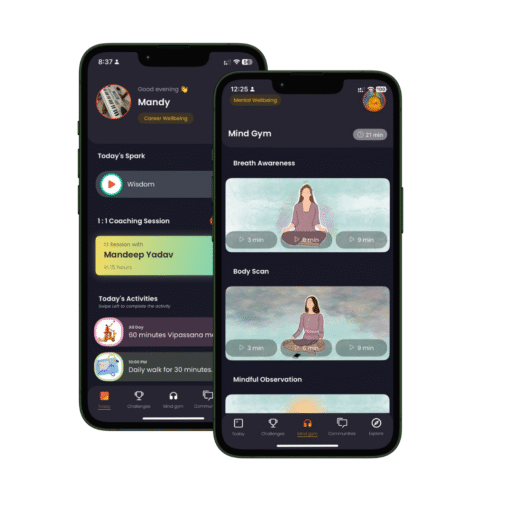
Download Executive Coaching App - Spark
Spark is an Executive Coaching Platform for Senior Leaders.
With just 15–20 minutes a day, Spark helps you build calm, clarity, resilience, and focus—through simple practices, guided reflections, and habit-building tools designed for real workdays.