Reclaiming Your Career Pathway as a Senior Leader
At some point in your career pathway, the biggest risk isn’t failure. It’s comfort.
Not the kind of comfort that comes from peace and stability — but the kind that quietly convinces you to stay small inside a big role. You keep delivering, showing up, and being “reliable,” and yet something in you knows you’re not fully expressing the leader you’re capable of becoming.
This is how many senior leaders unknowingly drift away from their own career pathway. Not because they lack ambition, but because they’ve learned to conform — to the environment, to expectations, and sometimes even to their own past self.
When Senior Leaders Start Underperforming (Quietly)
Underperforming isn’t always visible. It doesn’t always mean missed targets or weak results. In senior leadership, underperforming often looks like:
-
avoiding the conversation you need to have
-
staying silent in rooms where your voice matters
-
choosing “safe” visibility instead of meaningful influence
-
over-managing instead of leading
-
settling into a routine that no longer challenges you
And the most dangerous part? You can still be praised while doing it. You can still be promoted slowly while losing yourself inside the process.
That is why the biggest threat to your career pathway is not external competition — it is internal compromise.
The Shackles Leaders Create for Themselves
Most senior leaders aren’t stuck because they don’t know what to do. They’re stuck because of invisible shackles they’ve created over time:
-
“This is how I am.”
-
“I’m not that kind of leader.”
-
“If I push too hard, I’ll lose relationships.”
-
“It’s too late to change direction now.”
-
“I should be grateful, not restless.”
These sound rational. They sound mature. But often they’re fear wearing a suit.
And fear doesn’t just block action — it narrows thinking. It makes you postpone the one area of life that matters deeply: your own growth.
Your Career Pathway Isn’t a Ladder. It’s a Choice.
A strong career pathway at senior levels is not simply the next title. It’s the next version of you.
The question is not: “What role should I take next?”
The real question is: “Who am I becoming next?”
Because even if you get the promotion, the bigger role, the new company — if you carry the same patterns, the same hesitation, the same self-doubt, you’ll recreate the same ceiling in a new place.
This is why leadership growth requires one uncomfortable move: breaking the habit of being familiar.
What “Breaking the Habit” Looks Like
It doesn’t mean being aggressive or forceful. It means being honest.
-
You stop waiting to be “noticed” and start positioning your value
-
You stop avoiding discomfort and start using it as a signal
-
You stop managing perceptions and start leading with presence
-
You stop staying loyal to the past and start choosing the future
A clear career pathway is built when you stop negotiating with your potential.
A Question For You
Where are you holding back today — not because you can’t, but because it feels safer to stay the same?
If you can answer that honestly, you’ve already started shifting your career pathway.
A Simple Action
Pick one area you’ve been postponing:
-
visibility and influence
-
executive presence
-
a career move you keep delaying
-
a difficult conversation
-
a leadership identity shift
Then ask: What is one step I will take this week — even if it’s uncomfortable?
Small steps create momentum. Momentum changes identity. Identity shapes your career pathway.
Ready to move forward with clarity?
If you’re a senior leader and you’re serious about creating a stronger career pathway — not just incremental progress — executive coaching can help you see clearly, act decisively, and lead from your next level.
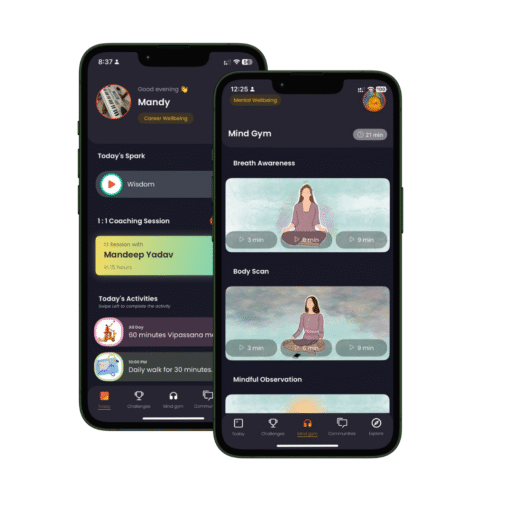
Download Executive Coaching App - Spark
Spark is an Executive Coaching Platform for Senior Leaders.
With just 15–20 minutes a day, Spark helps you build calm, clarity, resilience, and focus—through simple practices, guided reflections, and habit-building tools designed for real workdays.